
Your heart's racing. Your palms are sweating. You stare at the first question and suddenly - everything you studied vanishes. Sound familiar? If you're wondering how to overcome test anxiety, you're far from alone. This experience affects roughly 40% of students, and it's probably costing you points you've actually earned.
Here's the thing about test anxiety: it's not a sign of weakness or poor preparation. It's your brain's survival instincts misfiring in a modern context. And once you understand what's actually happening in your nervous system, you can learn to work with it instead of against it.
This guide covers practical, science-backed strategies to overcome test anxiety - from breathing techniques that calm your nervous system in minutes, to long-term approaches that rewire how your brain responds to exams. Whether you're facing a proctored exam, standardized tests, or regular classroom quizzes, these methods work.
Let's break down what's happening and, more importantly, what you can actually do about it.
Understanding Test Anxiety
Before we talk about how to overcome test anxiety, let's understand what's actually happening. When you perceive a test as threatening, your amygdala - the brain's alarm system - triggers a cascade of stress hormones. Cortisol floods your system. Your heart rate increases. Blood flows away from your prefrontal cortex (where thinking happens) toward your muscles (for running from predators).
The problem? Your prefrontal cortex is exactly where you need blood flow during an exam. It handles working memory, logical reasoning, and information retrieval. When anxiety diverts resources away from it, you literally can't think as clearly.
Types of Test Anxiety
Not all test anxiety looks the same. Understanding your pattern helps target the right solutions:
- Anticipatory anxiety: Worry in the days or hours before a test. You can't stop thinking about worst-case scenarios.
- Situational anxiety: Panic that hits when you sit down and see the exam. You might have felt fine until that moment.
- Retrieval anxiety: You studied, you know the material, but you blank out during the test and remember everything afterward.
- Perfectionism-driven anxiety: Fear of making any mistakes. Spending too much time on questions because no answer feels "right enough."
Most people experience some combination of these. The strategies in this guide address all types, but identifying your primary pattern helps you prioritize which techniques to try first.
Physical Symptoms and How to Manage Them
Test anxiety isn't just in your head - it shows up in your body. And here's the good news: you can work backwards. Calming physical symptoms often calms mental anxiety.
Common Physical Symptoms
- Racing or pounding heart
- Sweaty palms and underarms
- Shallow, rapid breathing
- Muscle tension (especially jaw, shoulders, back)
- Upset stomach, nausea
- Shaky hands
- Headache or dizziness
- Feeling hot or flushed
Immediate Physical Interventions
These work within minutes to reduce physical symptoms:
Quick Relief Techniques:
- Cold water on wrists: Triggers your dive reflex, immediately slowing heart rate
- Progressive muscle relaxation: Tense then release muscle groups, starting from feet up
- Grounding exercise: Name 5 things you see, 4 you hear, 3 you feel, 2 you smell, 1 you taste
- Posture adjustment: Sit up straight, feet flat on floor - confident posture reduces cortisol
If you're taking a proctored exam from home, keep water nearby and take advantage of any allowed bathroom breaks to splash cold water on your face or wrists.
Breathing Techniques That Actually Work
If you only learn one thing from this guide about how to overcome test anxiety, make it breathing. Controlled breathing is the fastest way to activate your parasympathetic nervous system - your body's "rest and digest" mode that counteracts the stress response.
The key is making your exhale longer than your inhale. This sends a signal to your brain that you're safe.
The 4-7-8 Technique
Steps for 4-7-8 Breathing:
- Breathe in through your nose for 4 seconds
- Hold your breath for 7 seconds
- Exhale slowly through your mouth for 8 seconds
- Repeat 3-4 times
Practice this daily so it becomes automatic when you need it. Most people feel noticeably calmer after just one cycle.
Box Breathing
Used by Navy SEALs to stay calm under pressure. Simple and effective:
- Breathe in for 4 counts
- Hold for 4 counts
- Exhale for 4 counts
- Hold (empty) for 4 counts
- Repeat 4-6 times
Belly Breathing During the Test
When you notice anxiety rising mid-exam, try this subtle technique that nobody will notice:
- Place one hand on your stomach (under the desk is fine)
- Breathe so your belly expands, not your chest
- Slow your exhale - count to 6 while breathing out through your nose
- Do 3-5 breaths, then return to the question with fresh eyes
Mental Preparation Strategies
Physical techniques address symptoms. Mental strategies address causes. Both matter for learning how to overcome test anxiety effectively.
Reframe Your Thoughts
Anxious thoughts tend to follow patterns. Once you recognize them, you can interrupt them:
Common Anxious Thoughts (and Reframes):
- "I'm going to fail." → "I've prepared for this. I'll do my best and that's enough."
- "Everyone else knows this better." → "I can't know what others know. I focus on my own work."
- "I always choke on tests." → "Past struggles don't determine today. Each test is new."
- "If I fail, everything is ruined." → "One test rarely determines my future. This matters, but it's not everything."
Visualization
Athletes use this constantly, and it works for exams too. Spend 5-10 minutes visualizing:
- Walking into the test location feeling calm and prepared
- Sitting down and taking three deep breaths
- Reading questions clearly and remembering relevant information
- Working through difficult questions methodically, without panic
- Submitting the test feeling satisfied with your effort
The more vividly you imagine this, the more your brain treats it as practice. You're essentially giving yourself a "dress rehearsal" for success.
Pre-Test Routine
Having a consistent routine signals to your brain that everything is normal - reducing the novelty that triggers anxiety:
- Same breakfast on exam mornings
- Same music or podcast during your commute (or while setting up for online exams)
- Same quick review method (flashcards, notes, nothing)
- Same breathing exercises at the same point
- A personal "cue" - like touching your pen or taking three breaths before starting
Study Strategies to Reduce Anxiety
One of the best ways to reduce test anxiety is to feel genuinely prepared. But it's not just about studying more - it's about studying smarter.
Active Recall Over Re-Reading
Re-reading notes creates an illusion of knowledge. Active recall builds real confidence because you prove to yourself that you know the material:
- Close your notes and try to write down key concepts from memory
- Use flashcards, testing yourself rather than just reading
- Practice explaining concepts out loud as if teaching someone
- Take practice tests under realistic conditions
When you struggle during study and then get it right, you build the neural pathways for retrieval. This makes the information accessible under stress, not just in comfortable conditions.
Spaced Repetition
Cramming the night before maximizes anxiety and minimizes retention. Instead:
- Start studying well before the exam - days or weeks, depending on the material
- Review material at increasing intervals (1 day, then 3 days, then 1 week)
- Each review session can be shorter as the information solidifies
Knowing you've reviewed material multiple times and remembered it each time gives genuine confidence that cramming can't provide. For comprehensive strategies on exam preparation, spaced repetition is foundational.
Practice Under Test Conditions
If you only ever study in comfortable settings, the test environment itself becomes a stressor. Reduce this by:
- Taking timed practice tests in quiet, test-like environments
- Practicing with the same tools you'll use (calculator type, etc.)
- Simulating test-day conditions (limited breaks, no phone)
- Even wearing similar clothes to make test day feel familiar
Exam Day Tips to Stay Calm
You've prepared. Now it's game day. These practical tips help you stay calm when it counts.
The Night Before
- Stop studying early: Light review is fine, but intensive studying the night before usually increases anxiety more than knowledge
- Prepare everything: Lay out clothes, gather materials, set alarms - remove all morning decisions
- Limit screen time: Blue light interferes with sleep quality
- Avoid alcohol and heavy meals: Both disrupt sleep and next-day focus
- Accept imperfect sleep: If you can't sleep, rest is still helpful. Don't stress about not sleeping.
The Morning Of
- Wake up early enough: Rushing elevates cortisol before you even start the test
- Eat a balanced breakfast: Protein and complex carbs for sustained energy, not sugar crashes
- Light exercise: Even a 10-minute walk burns off nervous energy
- Avoid anxious people: Anxiety is contagious. Skip the pre-test "what did you study?" conversations
- Arrive early, not too early: 10-15 minutes gives buffer without excessive waiting
During the Test
When Anxiety Hits Mid-Test:
- Pause: Set your pencil down. Take three slow breaths.
- Ground: Feel your feet on the floor. Notice the chair supporting you.
- Reset: Skip the problem causing anxiety. Move to something easier.
- Return: Come back to difficult questions with fresh perspective.
If you're taking an online proctored exam, these same principles apply. Use allowed breaks, keep water nearby, and remember that the proctor can't see your internal state - only your external behavior.
Long-Term Solutions for Test Anxiety
Quick fixes help in the moment. But if you want to fundamentally change your relationship with test anxiety, consider these longer-term approaches.
Cognitive Behavioral Techniques
CBT is the gold standard for treating anxiety. Key principles you can apply yourself:
- Identify automatic thoughts: Notice what goes through your mind when you think about tests. Write these down.
- Challenge distortions: Are you catastrophizing? Overgeneralizing? What's the actual evidence?
- Behavioral experiments: Test your fears. If you believe "I always blank out," recall times you didn't.
- Gradual exposure: Slowly increase your exposure to testing situations, building tolerance.
Regular Mindfulness Practice
Even 10 minutes daily changes how your brain responds to stress over time:
- Regular meditation reduces baseline anxiety levels - not just during meditation
- It trains attention, helping you focus on the test rather than your worries
- You learn to observe anxious thoughts without getting swept away by them
- Apps like Headspace, Calm, or free YouTube guided meditations make starting easy
Physical Health Foundations
Your physical state profoundly affects anxiety levels:
- Exercise: Regular cardio reduces baseline anxiety and improves stress resilience
- Sleep: Chronic sleep deprivation amplifies anxiety. Prioritize 7-9 hours.
- Caffeine: If you're anxiety-prone, reduce or eliminate it
- Nutrition: Stable blood sugar prevents anxiety spikes. Limit sugar and processed foods.
When to Seek Professional Help
Self-help strategies work for most people. But sometimes test anxiety is severe enough to warrant professional support. Consider seeking help if:
- Anxiety significantly affects your grades despite adequate preparation
- You experience panic attacks before or during exams
- Test anxiety has persisted for years without improvement
- Anxiety extends beyond tests to other areas of life
- You're avoiding classes, majors, or opportunities because of exam requirements
- Physical symptoms are severe (fainting, vomiting, etc.)
Professional Resources
- School counseling services: Free for enrolled students, often specialized in academic anxiety
- Disability services: Can provide accommodations like extended time or separate testing rooms
- Therapists specializing in anxiety: CBT-trained therapists can provide personalized treatment
- Psychiatrists: For cases where medication might help alongside therapy
There's no shame in getting help. Severe test anxiety is a recognized condition that responds well to treatment. Many successful people have worked through it - and you can too.
Learning how to overcome test anxiety isn't about eliminating all nervousness - it's about developing tools to manage it. Some tension before an important exam is normal. Even helpful. The goal is keeping it at a level that sharpens your focus rather than derailing it.
Start with the basics: breathing techniques, physical management, better study strategies. Build up to the longer-term work of changing your relationship with anxiety itself. Every test you get through - even imperfectly - is practice that makes the next one easier.
You're not alone in this struggle. And with the right approach, you can perform at a level that actually reflects what you know - not just what anxiety lets you show.
If you're preparing for a specific exam and want personalized support, explore our exam preparation services or check out our guides for specific tests like the GRE, GMAT, or TEAS. We're here to help you succeed.
Frequently Asked Questions
What causes test anxiety?
Test anxiety stems from a combination of factors: fear of failure, past negative experiences, lack of preparation, perfectionism, and high-stakes pressure. When your brain perceives an exam as a threat, it triggers your fight-or-flight response - releasing cortisol and adrenaline that can interfere with memory retrieval and clear thinking. Understanding that test anxiety is a normal physiological response - not a character flaw - is the first step toward managing it effectively.
How do I calm my nerves before a test?
Start with deep breathing: inhale for 4 counts, hold for 4, exhale for 6. This activates your parasympathetic nervous system and reduces cortisol. Arrive early to avoid rushing, but not so early you sit and worry. Use positive self-talk - replace 'I'm going to fail' with 'I've prepared for this.' Do a brief body scan and consciously relax tense muscles, especially in your shoulders, jaw, and hands. Many students find that light physical activity before the exam - a short walk or stretching - helps release nervous energy.
What are the best breathing techniques for test anxiety?
The 4-7-8 technique is highly effective: breathe in through your nose for 4 seconds, hold for 7 seconds, exhale through your mouth for 8 seconds. Box breathing works well too: 4 counts in, 4 counts hold, 4 counts out, 4 counts hold before repeating. During the exam, try belly breathing - place your hand on your stomach and ensure it rises as you breathe, indicating deep diaphragmatic breathing rather than shallow chest breathing that increases anxiety.
How can I stop blanking out during exams?
Blanking out happens when anxiety floods your working memory. If it occurs, pause - don't panic. Close your eyes for a moment and take three deep breaths. Move to an easier question to rebuild confidence and get your brain back online. Write down anything you remember about the topic, even fragments - this often triggers more complete recall. Practice retrieval during studying (testing yourself rather than just re-reading) trains your brain to access information under pressure.
Does test anxiety affect my actual performance?
Yes, research consistently shows that test anxiety can lower scores by 10-15% compared to your actual knowledge level. The stress hormones cortisol and adrenaline interfere with the prefrontal cortex - the brain region responsible for working memory and complex thinking. However, moderate anxiety can actually improve performance by increasing alertness and focus. The goal isn't to eliminate all nervousness, but to manage it so it doesn't overwhelm your cognitive resources.
What should I eat before an exam to reduce anxiety?
Eat a balanced meal with complex carbohydrates, protein, and healthy fats about 2-3 hours before your exam. Good options include oatmeal with nuts, eggs with whole-grain toast, or yogurt with fruit. Avoid caffeine if you're anxiety-prone - it can amplify nervousness. Skip sugary foods that cause energy crashes. Stay hydrated, but don't overdo it right before the test. Some students find that eating a small, familiar snack (like a banana or almonds) shortly before the exam provides comfort and steady energy.
How do I prepare for a test when I have anxiety?
Create a realistic study schedule that prevents last-minute cramming - a major anxiety trigger. Use active recall and practice testing rather than passive re-reading, as this builds confidence through demonstrated competence. Study in conditions similar to the actual test environment. Practice managing anxiety during study sessions so it's familiar on exam day. Get adequate sleep - exhaustion amplifies anxiety. Build in breaks and rewards. The more prepared you actually are, the less your brain has to compensate with anxiety.
Can you overcome test anxiety permanently?
Most people can significantly reduce test anxiety with consistent practice of management techniques. Complete elimination isn't realistic or even desirable - some nervousness keeps you alert. What changes is your relationship with anxiety. Through repeated exposure to testing situations combined with coping strategies, your brain learns that exams aren't genuine threats. This process, called systematic desensitization, rewires your anxiety response over time. Many students report their anxiety decreasing substantially after 3-6 months of intentional practice.
What's the difference between test anxiety and being unprepared?
This is an important distinction. If you haven't studied adequately, feeling worried is a rational response - not anxiety disorder. True test anxiety occurs even when you're well-prepared. The telltale signs: you know the material when studying but can't access it during the test, physical symptoms like racing heart and sweating appear, and your performance doesn't match your preparation level. If being better prepared eliminates your worry, that's normal concern. If it persists despite preparation, that's test anxiety.
Should I tell my professor about my test anxiety?
In many cases, yes. Professors often have accommodations available for students with documented test anxiety - extra time, separate testing rooms, or alternative formats. Many schools require documentation through disability services for formal accommodations. Even without formal accommodations, professors may offer flexibility. At minimum, discussing it removes the burden of hiding your struggle. Most educators are more understanding than students expect - anxiety is incredibly common, and they want to see you succeed.
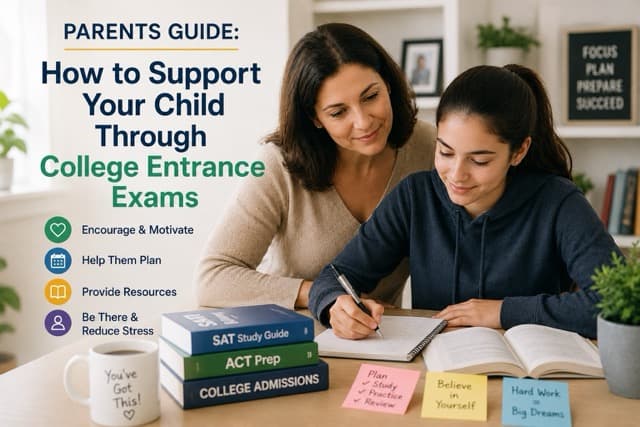
How do I help my child with test anxiety?
Model calm behavior - children absorb parental anxiety. Avoid putting excessive pressure on grades and instead praise effort and learning. Teach breathing techniques as games before anxiety situations arise. Validate their feelings while expressing confidence in their ability to handle difficult situations. Create low-stakes practice opportunities so tests feel more familiar. Establish a calming pre-test routine. If anxiety is severe, consider working with a school counselor or child psychologist who specializes in anxiety.
Do test anxiety medications work?
For some students, medications like beta-blockers (which reduce physical symptoms) or anti-anxiety medications can be helpful, especially for severe cases. However, medication typically works best combined with cognitive-behavioral techniques. Beta-blockers address symptoms but don't change anxious thought patterns. Any medication decision should involve a healthcare provider who can weigh benefits against side effects and explore whether your anxiety might respond to non-medication approaches first.