So you want to study in the US. Maybe you've been dreaming about it for years, scrolling through campus photos late at night, imagining yourself walking across a quad somewhere in Boston or California. But then you hit the TOEFL requirements for US universities - and suddenly the whole thing feels way more complicated than it should be.
Here's the reality: every university has different TOEFL score requirements. Some want a 100. Others accept a 61. A handful don't even require TOEFL at all. And if you're applying to graduate school? The rules change again. It's genuinely confusing, and honestly, most of the information floating around online is either outdated or maddeningly vague.
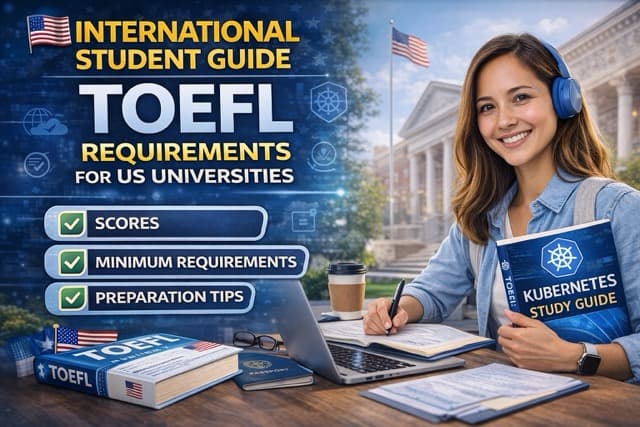
This guide cuts through the noise. We've compiled the actual TOEFL requirements for US universities in 2026 - broken down by tier, by program level, and by specific schools. Whether you're a high school student planning your first application or a working professional eyeing a master's degree, you'll find exactly what you need to know right here.
Why TOEFL Matters for International Students
Let's get something straight: the TOEFL isn't just a box to check on your application. For international students, it's the single most important gatekeeper between you and a US education. Universities use your TOEFL score to determine whether you can actually handle coursework delivered entirely in English - lectures, textbooks, research papers, group discussions, the whole thing.
And it goes beyond admissions. Your TOEFL score for admission can affect scholarship eligibility, teaching assistant positions (critical for funded PhD programs), and even housing placement at some schools. A strong score doesn't just get your foot in the door. It opens doors you didn't even know existed.
But here's what really matters: TOEFL scores have become more important in 2026, not less. With record numbers of international students applying to US universities, admissions offices are leaning harder on standardized English proficiency scores to differentiate candidates. The competition is fierce, and meeting the minimum TOEFL requirements for US universities is just the starting line.
Is TOEFL required for international students at every single US school? Not technically. But the vast majority require it or an equivalent test, and choosing a university solely because it doesn't require TOEFL is... probably not the best strategy for your future. More on that later.
TOEFL Score Requirements by University Tier
Not all TOEFL score requirements are created equal. The score you need depends heavily on where you're applying. Think of US universities in roughly four tiers when it comes to TOEFL minimum score requirements:
Tier 1: Ivy League and Top-20 Schools (100-110+ iBT)
We're talking Harvard, MIT, Stanford, Columbia, Yale, Princeton. These schools officially list minimums around 100, but let's be real - if you're applying to Harvard with a 100, you're at the bottom of the pile. Competitive applicants at these schools typically score 110-120. The TOEFL requirement at MIT for undergraduates is 100 minimum with 23+ per section. Stanford? Same ballpark. These are aspirational targets, not minimum thresholds.
Tier 2: Top-50 Research Universities (80-100 iBT)
Schools like University of Virginia, University of Michigan, NYU, Boston University, and University of Wisconsin. The TOEFL requirement for University of Virginia sits at 90 for most programs. NYU's TOEFL requirement for undergraduates hovers around 100. These are still competitive numbers, but they're achievable with focused preparation. Most students studying in the USA with TOEFL scores in this range have solid options.
Tier 3: State Universities and Mid-Range Schools (61-80 iBT)
This is where a lot of international students land - and honestly, there's nothing wrong with that. Schools like University of Arizona, Kansas State University, and the University of Kansas have TOEFL requirements in the 60s and 70s. The KSU TOEFL requirement is around 60-70 depending on the program. The KU TOEFL requirement sits similarly. These schools offer excellent education at more accessible English proficiency thresholds.
Tier 4: Community Colleges and Open-Access Institutions (45-60 iBT)
Community colleges are an underrated pathway. Many accept TOEFL scores as low as 45-60, offer smaller class sizes, and provide a bridge to four-year universities through transfer agreements. If your TOEFL score isn't where you want it yet, this can be a smart stepping stone rather than a compromise.
TOEFL Requirements for Top US Universities
Alright, let's get specific. Here are the actual TOEFL iBT requirements for some of the most popular US universities that international students target in 2026. These numbers come directly from admissions pages - but always double-check, because universities update their policies.
| University | Minimum TOEFL iBT | Section Minimums | Notes |
|---|---|---|---|
| Harvard University | 100 (recommended) | None specified | Competitive admits score 110+ |
| MIT | 100 | 23+ per section recommended | No TOEFL waiver for any applicant |
| Stanford University | 100 | Varies by department | Some programs require 110+ |
| Columbia University | 100 | 25+ per section | Strict section requirements |
| NYU | 100 | None specified | Some programs accept lower scores |
| University of Michigan | 88-100 | 23+ Listening/Reading, 21+ Speaking/Writing | Varies by college |
| UT Austin | 79 | None specified | Competitive programs prefer 100+ |
| University of Arizona | 70 | None specified | Conditional admit at lower scores |
| Kansas State University | 60-79 | Varies by program | ESL support available |
| University of Kansas | 70 | None specified | Conditional admission pathway |
A quick word about these numbers: TOEFL requirements for universities change. Sometimes annually, sometimes mid-cycle. The scores above reflect 2026 published requirements, but you should always verify directly with the school. Admissions counselors can also tell you what score range admitted students actually have - which is usually higher than the stated minimum.
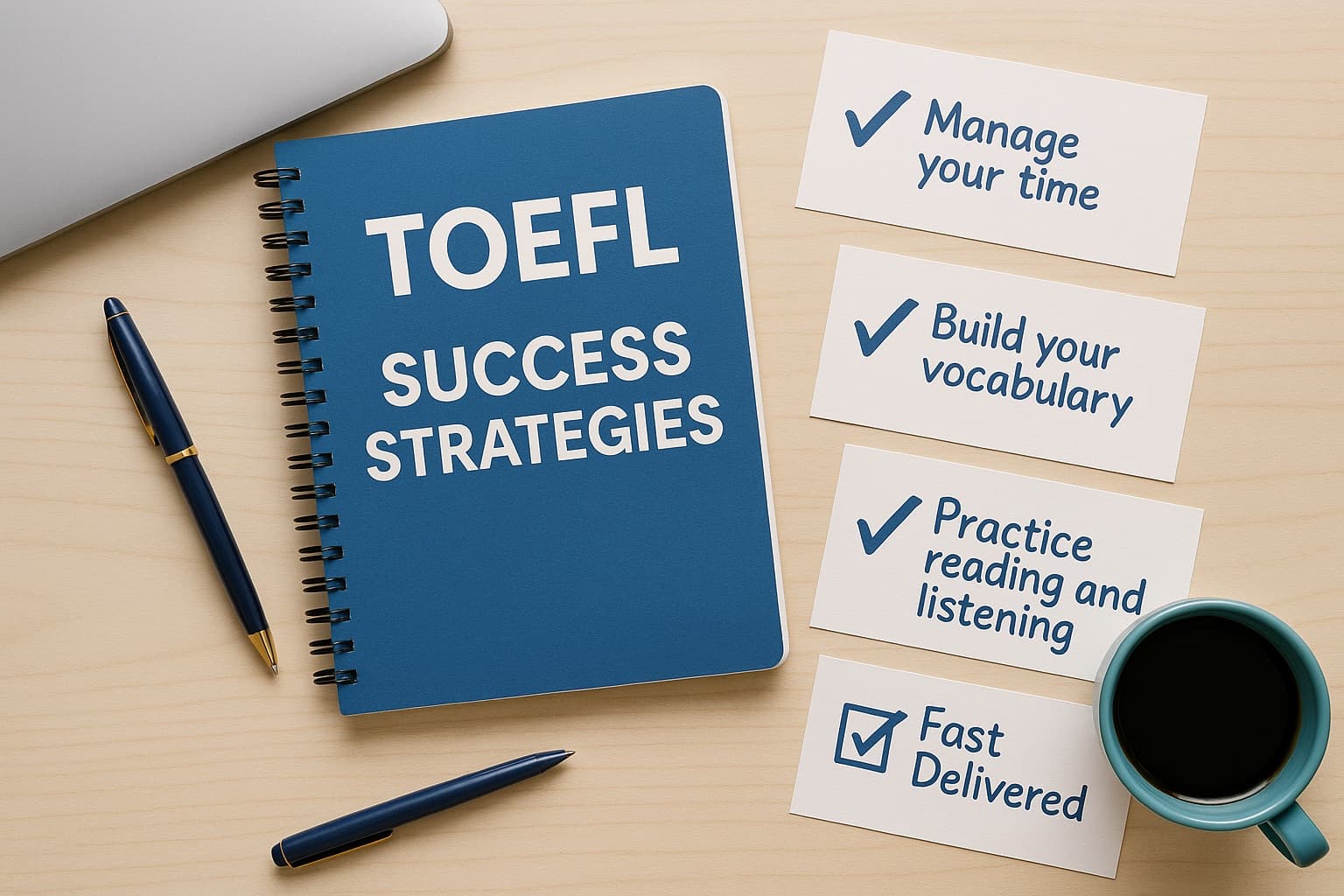
Need help hitting these scores? Our Fast TOEFL Pass tutoring program is designed specifically for international students who need to reach a target score on a deadline. We've helped students improve by 15-25 points in as little as 4-6 weeks.
TOEFL Requirements for Graduate School and PhD Programs
Graduate school TOEFL requirements deserve their own section because - surprise - they're often completely different from undergraduate requirements at the same university. And they can vary wildly between departments. The English department at a university might require 105 while the engineering department accepts 80. Makes sense when you think about it, but it trips up a lot of applicants.
The TOEFL requirement for graduate school in the US generally falls between 80-100 for most master's programs. But competitive programs - MBA programs at top business schools, law school LLM programs, or PhD programs in the humanities - often push that to 100-110. Some programs care more about specific sections too. A communication studies PhD might require a Speaking score of 26+, while a computer science program might be fine with 20 in Speaking as long as your total is above 90.
PhD-Specific Considerations
TOEFL requirements for PhD programs come with an extra wrinkle: teaching assistantships. If you're going to TA (and most funded PhD students do), many universities require a Speaking section score of 24-26. Fall below that, and you might still get admitted, but you won't be able to TA - which often means no funding. So when you see a PhD program listing a TOEFL minimum of 80, understand that the practical minimum for a funded position might be significantly higher.
Also worth noting: if you completed your bachelor's degree at an English-medium institution in the US, UK, Australia, or certain other countries, many graduate programs will waive the TOEFL requirement entirely. But this isn't automatic - you usually need to request the waiver and provide proof of your English-medium education. Do this early, because processing waivers takes time, and you don't want a missing TOEFL score to delay your application.
Applying for graduate programs and need to hit a specific TOEFL target? Check out our guide on how to pass TOEFL quickly for strategies that actually move the needle.
Struggling to Hit Your Target TOEFL Score?
Our expert TOEFL tutors specialize in helping international students reach their target scores fast. Personalized study plans, score-specific strategies, and real practice.
US Universities That Don't Require TOEFL
This is the section everyone skips to. And look, I get it - the idea of skipping the TOEFL entirely is appealing. There are legitimate universities in the US that don't require TOEFL for international students, or that offer pathways around it. But before you go all-in on this strategy, let's talk about what that actually looks like.
Universities without TOEFL requirements generally fall into a few categories:
- Conditional Admission Programs: You're admitted to the university, but you have to complete an intensive English program (IEP) on campus before starting your degree coursework. This adds time and money, but it gets you on campus and into the system.
- Schools Accepting Alternative Tests: Some universities accept Duolingo English Test, IELTS, PTE Academic, or even in-house placement tests instead of TOEFL. This isn't "no English requirement" - it's just a different test.
- Community Colleges: Many community colleges have very low or no TOEFL requirements. They often have transfer agreements with four-year universities, making them a practical stepping stone.
- Universities With Waiver Policies: If you graduated from an English-medium high school, scored well on SAT/ACT verbal sections, or are a US permanent resident, some schools will waive the TOEFL requirement entirely.
But here's the honest truth: no TOEFL required universities in the USA tend to be less competitive overall. That's not always a bad thing - some offer excellent programs. But if you're choosing a school solely because it doesn't require TOEFL, you might be limiting your options in ways that affect your career long-term.
The smarter move? Take the TOEFL, score well, and keep all your options open. If you need help getting there, our TOEFL exam preparation services can help you build a realistic study plan around your timeline and target score.
TOEFL for Visa Applications and Immigration
Here's a question that comes up constantly: do I need TOEFL for a US student visa? The short answer is technically no - USCIS doesn't require a TOEFL score for F-1 or J-1 student visas. But the practical answer is kind of yes, and here's why.
To get a student visa, you need an I-20 form from a SEVP-certified school. To get that I-20, you need to be admitted. And to be admitted at most schools... you need a TOEFL score. So while the embassy won't ask for your TOEFL score directly, the entire chain of events that leads to your visa starts with passing the TOEFL.
There's another angle here that people miss. During your visa interview, the consular officer will assess your English proficiency informally. They're having a conversation with you - asking about your study plans, your financial situation, your ties to your home country. If you can't communicate clearly in English, that's a red flag, regardless of what your TOEFL score says. A strong TOEFL score backed by actual English fluency makes the visa interview significantly smoother.
Is TOEFL required for US permanent residents? Generally no. Most universities waive English proficiency requirements for permanent residents and green card holders, though a few programs may still require it if your undergraduate education was in a non-English-speaking country. Is TOEFL required for US citizens? Almost never - but some graduate programs make exceptions for citizens who studied abroad entirely in another language.
TOEFL vs IELTS: Which Do US Universities Prefer?
Quick answer: most US universities accept both. Longer answer: there are real differences that might make one better for you than the other.
The TOEFL iBT is American-made (by ETS), computer-based, and heavily focused on academic English. The IELTS is British-made, available in both computer and paper formats, and uses slightly different question types. Both test Reading, Listening, Speaking, and Writing. Both are valid for two years.
For US universities specifically, the TOEFL has a few advantages. It's the most widely accepted test in the US, it's entirely computer-based (which matches how you'll actually study in college), and the format is more standardized - you know exactly what to expect. Some universities also list TOEFL requirements more prominently than IELTS equivalents, which can make it easier to figure out what you need.
That said, if you're stronger with face-to-face speaking (IELTS has a live interview while TOEFL has you talk to a computer), or if you're also applying to schools in the UK, Australia, or Canada, IELTS might be worth considering. We have a detailed breakdown in our TOEFL vs IELTS comparison guide if you want to dig deeper into this decision.
How to Meet TOEFL Requirements Fast
So you know your target score. Maybe it's an 80 for a solid state university, or a 100+ for a dream school. Now what? How do you actually get there - especially if your application deadline is breathing down your neck?
First things first: take a diagnostic test. Not to study for it. Not to prepare. Just sit down with a full-length official TOEFL practice test and see where you stand. Your diagnostic score tells you exactly how far you need to go and which sections are dragging you down. Without this, you're guessing - and guessing wastes time you probably don't have.
Most students can improve their TOEFL score by 10-20 points in 4-8 weeks of focused study. The key word is focused. Not "study everything equally." Not "do random practice tests." Focused means identifying your weakest sections and hammering them relentlessly while maintaining your stronger areas.
The 80-Point Strategy (for Tier 3 Schools)
If you need a 70-80, you've got some breathing room. Focus on Reading and Listening first - these sections are the most "studyable" and show the fastest improvement. Build academic vocabulary (the Academic Word List is your best friend), practice active reading strategies, and train your ear with real academic content. Four weeks of consistent daily practice should get you there.
The 100-Point Strategy (for Top Schools)
Hitting 100 requires balance across all four sections. You can't afford a weak link. This means dedicated Speaking practice (record yourself daily, use templates for integrated tasks), structured Writing practice (5-paragraph essays, timed), and continued Reading/Listening drilling. Six to eight weeks minimum, with at least 2-3 hours daily. If you're currently scoring below 80, budget 10-12 weeks.
The 110+ Strategy (for Ivy League)
At this level, every point matters and generic strategies won't cut it. You need personalized feedback on your Speaking and Writing - these are the sections where most students plateau in the high 20s. Working with a tutor who can identify exactly what's holding your Speaking score at 24 instead of 28 is worth every penny. Consider our Fast TOEFL Pass tutoring for targeted, score-specific coaching.
And honestly? Don't go it alone if you don't have to. The TOEFL is high-stakes, and the difference between a 95 and a 100 can mean the difference between admission and rejection at your top choice. Professional guidance, whether through our TOEFL exam services or another resource, can save you months of trial and error. If you're juggling exam prep with other test requirements, our GRE prep tips guide and active recall study techniques can help you study smarter across the board.
Frequently Asked Questions
What TOEFL score is required for US universities?
TOEFL requirements vary widely by university. Community colleges typically accept scores of 60-70, mid-tier state universities require 70-90, competitive universities want 90-100, and Ivy League or top-tier schools often require 100-110+. Always check your target school's specific admissions page for current minimum scores, as requirements can change year to year.
Is TOEFL required for international students applying to US universities?
Most US universities require TOEFL or an equivalent English proficiency test from international students whose native language is not English. However, some schools waive this requirement if you've completed a certain number of years of education in English, earned a degree from an English-medium institution, or achieved high scores on the SAT/ACT verbal sections. A growing number of universities also accept Duolingo English Test as an alternative.
Do US citizens need to take the TOEFL?
Generally, US citizens and permanent residents do not need to take the TOEFL, even if English is not their first language. However, some graduate programs may require it for applicants who completed their undergraduate education outside the US or in a non-English-speaking country. Policies vary, so check directly with your target program.
What is the minimum TOEFL score for graduate school in the US?
Most US graduate programs require a minimum TOEFL iBT score between 80 and 100. Competitive programs at top universities - think Stanford, MIT, or Columbia - often set their minimums at 100-110. Many programs also have minimum section scores, commonly 20-25 per section. PhD programs sometimes have slightly different requirements depending on whether you'll serve as a teaching assistant.
Can I study in the USA without TOEFL?
Yes, it's possible. Some US universities don't require TOEFL for admission, especially community colleges, some state universities, and schools with conditional admission programs. You may also qualify for a TOEFL waiver if you scored well on the SAT/ACT English sections, graduated from an English-medium high school, or completed an intensive English program (IEP) at the university. That said, having a strong TOEFL score opens far more doors.
How long are TOEFL scores valid for US university admissions?
TOEFL scores are valid for two years from the test date. If your scores expire before your intended enrollment date, you'll need to retake the exam. Plan your test date strategically - ideally 6-12 months before application deadlines so you have time to retake if needed, while ensuring your scores remain valid through enrollment.
Is TOEFL required for a US student visa?
The TOEFL itself is not directly required for a US student visa (F-1 or J-1). However, you need an acceptance letter from a SEVP-certified school to apply for a student visa, and most of those schools require TOEFL for admission. So while USCIS doesn't ask for your TOEFL score at the embassy, you effectively need it to get the admission that makes your visa application possible.
What TOEFL score do I need for Harvard, MIT, or Stanford?
Harvard recommends a minimum TOEFL iBT score of 100 but notes that competitive applicants typically score well above that. MIT requires a minimum of 100 with recommended section scores of 23+ each. Stanford's minimum is 100 for most programs. Keep in mind that 'minimum' really means 'baseline' at these schools - admitted students often score 110-120. These are among the most competitive universities in the world, so aim high.
Do universities accept TOEFL Home Edition?
Yes, the TOEFL iBT Home Edition is accepted by virtually all universities that accept the standard TOEFL iBT, including top-tier institutions. ETS has confirmed that scores from the Home Edition are equivalent to test center scores. The format, content, scoring, and score reports are identical. It's a convenient option if you don't have easy access to a testing center, though you'll need a quiet, private room and a reliable internet connection.
What happens if my TOEFL score is below a university's minimum requirement?
If your score falls short, you have several options. Many universities offer conditional admission, where you're accepted pending completion of an on-campus intensive English program. Some schools allow you to retake the TOEFL and submit updated scores before a final deadline. You might also consider applying to schools with lower requirements as backups, or exploring universities that accept alternative tests like the Duolingo English Test or IELTS with lower equivalent scores.